Fly agaric
Amanita muscaria
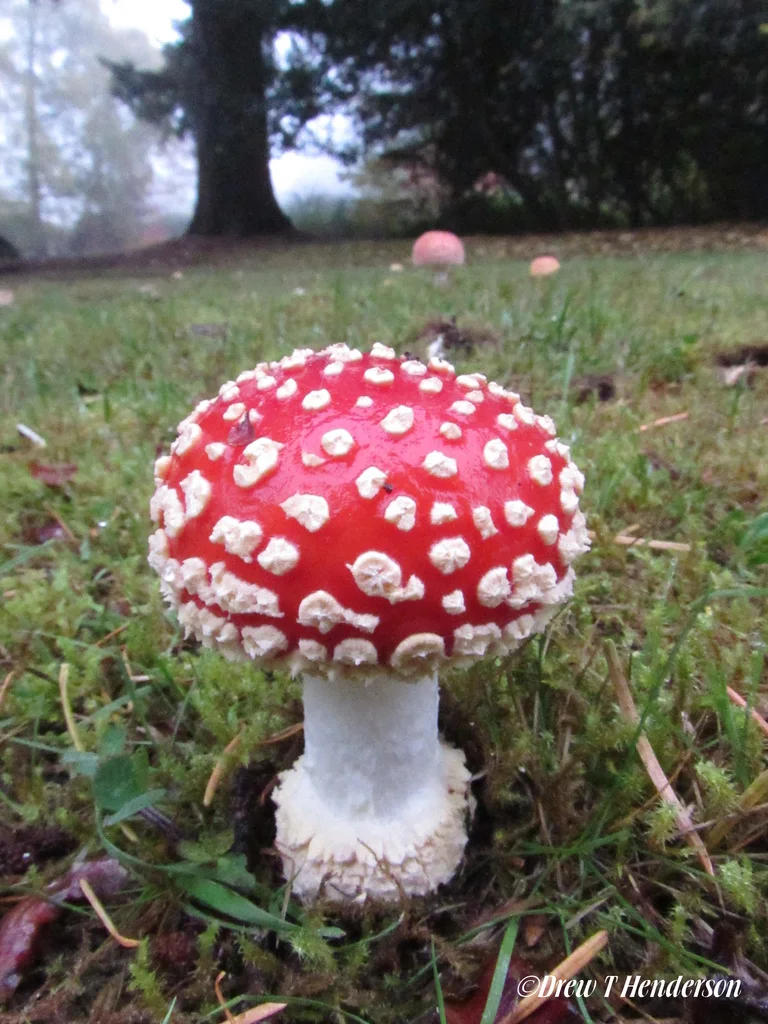
The pale flecks on the cap are remnants of tissue that enclosed the young mushroom.
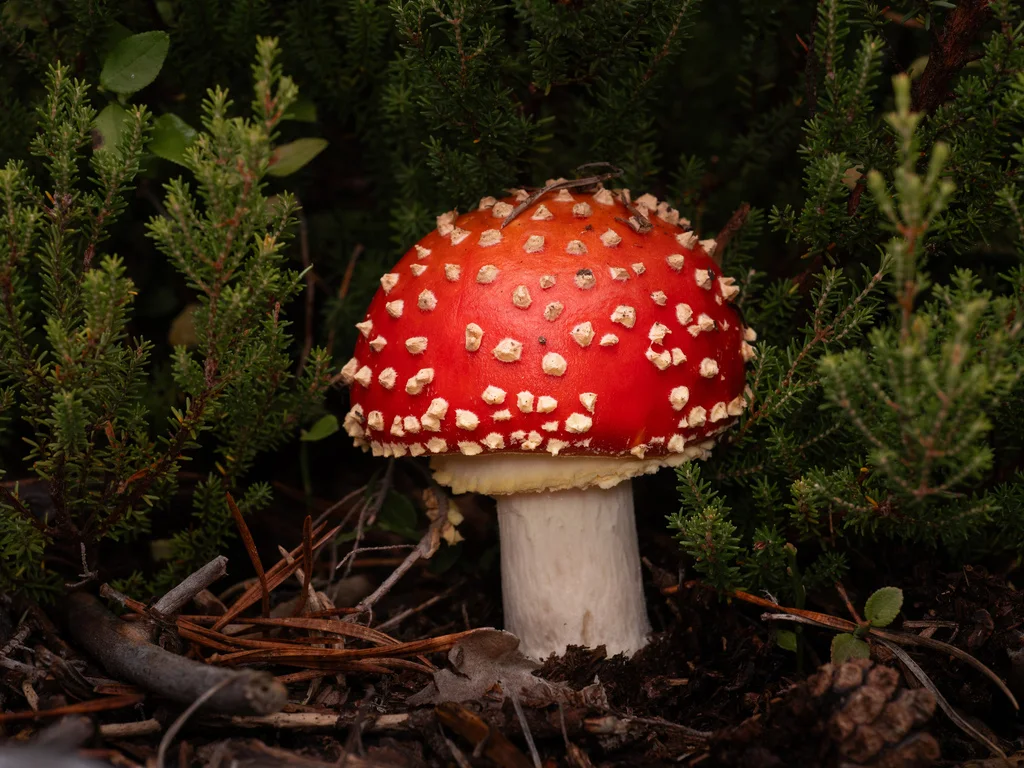
A closer look.
The red cap and pale flecks of fly agaric are familiar from woodland illustrations, but the mushroom is only the visible fruiting structure of a fungus. The flecks are remnants of a covering that enclosed the young mushroom and may wash away in rain. Beneath the surface, the fungus associates with tree roots, including those of birch, pine and spruce. This relationship helps illustrate how forest life extends below ground. Fly agaric is poisonous; an attractive photograph is never a reliable guide to whether a mushroom can be eaten.
Conservation status
Status unavailableNo unambiguous assessment is available in this record. Missing data does not mean low risk.
What do these statuses mean?
- Least Concern (LC) — Assessed below the thresholds for Near Threatened or a threatened category.
- Near Threatened (NT) — Close to qualifying for a threatened category.
- Vulnerable (VU) — A high risk of extinction in the wild.
- Endangered (EN) — A very high risk of extinction in the wild.
- Critically Endangered (CR) — An extremely high risk of extinction in the wild.
- Extinct in the Wild (EW) — Survives only in captivity, cultivation or populations outside its former range.
- Extinct (EX) — No reasonable doubt remains that the last individual has died.
- Data Deficient (DD) — Available evidence is insufficient to assess extinction risk.
- Not Evaluated (NE) — Not yet assessed against the IUCN criteria.
Colours are a simplified Nature Explorer guide. The category label and assessment scope carry the meaning. About the IUCN Red List.
Explore its wider world
Scientific sources
Another perspective.
A record of its presence.
Discover where people have documented this species.
Put discovery on the map.
Load the map to request GBIF basemap tiles and public biodiversity records.
Map data represents recorded observations and occurrences, not necessarily the complete natural range of a species. Sensitive or obscured coordinates are excluded from individual markers.