Common clownfish
Amphiprion ocellaris
Common clownfish can change from male to female as their social group changes.
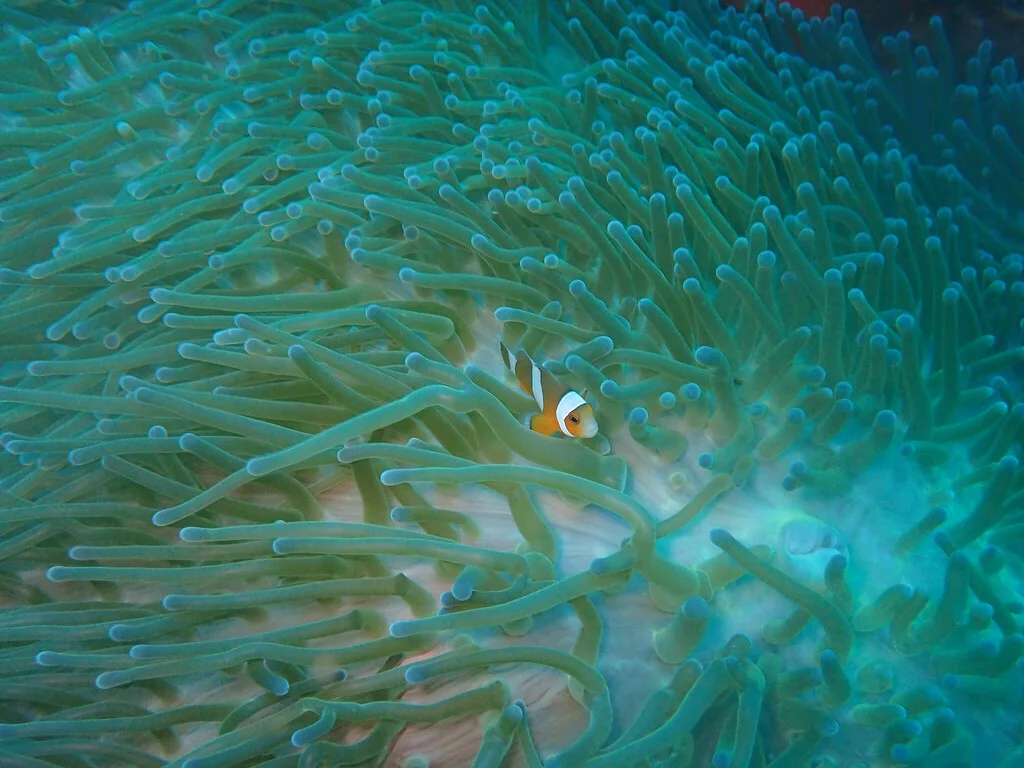
A closer look.
A common clownfish spends much of its life close to a host sea anemone. The anemone's tentacles offer shelter in shallow tropical reef habitats, and the fish rarely needs to range far from that refuge. Orange and white bands are familiar, but darker colour forms also occur. Groups have a size-based social order, with a breeding female and male above smaller individuals. If the female disappears, the largest male can change sex. This fish makes a useful starting point for exploring relationships between different species sharing the same small patch of reef.
Conservation status
Least Concern (LC)Assessed below the thresholds for Near Threatened or a threatened category.
View assessment source (opens in a new tab)This is the status reported by the cited source. Assessments can change, and regional populations may have a different status. The check date is not the assessment date.
What do these statuses mean?
- Least Concern (LC) — Assessed below the thresholds for Near Threatened or a threatened category.
- Near Threatened (NT) — Close to qualifying for a threatened category.
- Vulnerable (VU) — A high risk of extinction in the wild.
- Endangered (EN) — A very high risk of extinction in the wild.
- Critically Endangered (CR) — An extremely high risk of extinction in the wild.
- Extinct in the Wild (EW) — Survives only in captivity, cultivation or populations outside its former range.
- Extinct (EX) — No reasonable doubt remains that the last individual has died.
- Data Deficient (DD) — Available evidence is insufficient to assess extinction risk.
- Not Evaluated (NE) — Not yet assessed against the IUCN criteria.
Colours are a simplified Nature Explorer guide. The category label and assessment scope carry the meaning. About the IUCN Red List.
Explore its wider world
Scientific sources
Another perspective.
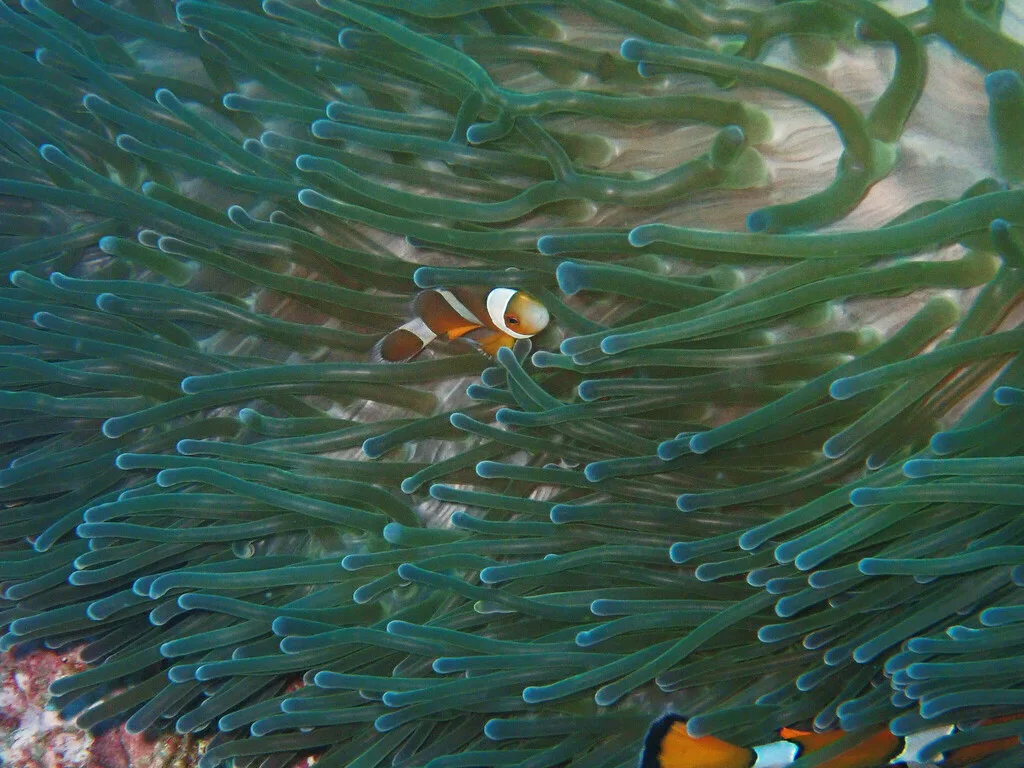
A record of its presence.
Discover where people have documented this species.
Put discovery on the map.
Load the map to request GBIF basemap tiles and public biodiversity records.
Map data represents recorded observations and occurrences, not necessarily the complete natural range of a species. Sensitive or obscured coordinates are excluded from individual markers.