Dyeing poison frog
Dendrobates tinctorius
The blue poison frog form belongs to the same species as other dyeing poison frogs.
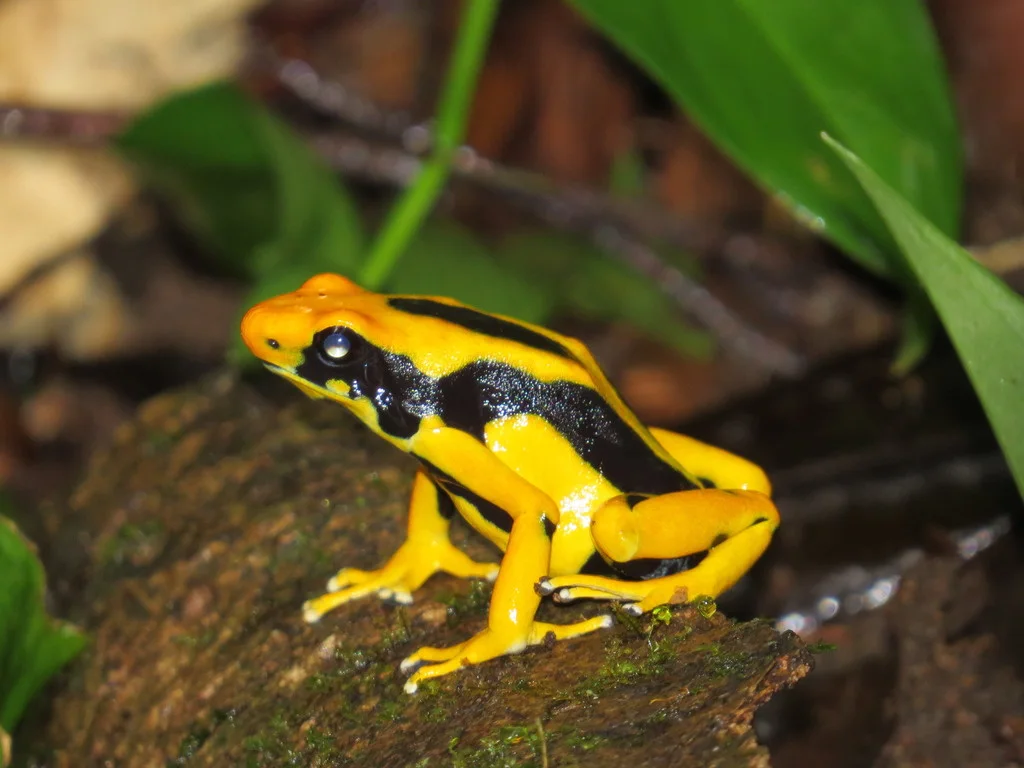
A closer look.
This small rainforest amphibian carries a striking range of blue, yellow, black and white markings. Colour varies between populations, so a single photograph cannot represent every form of the species. The blue form once called Dendrobates azureus is now included within Dendrobates tinctorius. Humid forest conditions are central to its life: amphibian skin loses moisture readily in dry air. On the forest floor and low vegetation, these frogs occupy a world of damp surfaces, leaf litter and tiny hiding places. Looking closely reveals a different scale of rainforest diversity from the familiar large mammals.
Conservation status
Least Concern (LC)Assessed below the thresholds for Near Threatened or a threatened category.
View assessment source (opens in a new tab)This is the status reported by the cited source. Assessments can change, and regional populations may have a different status. The check date is not the assessment date.
What do these statuses mean?
- Least Concern (LC) — Assessed below the thresholds for Near Threatened or a threatened category.
- Near Threatened (NT) — Close to qualifying for a threatened category.
- Vulnerable (VU) — A high risk of extinction in the wild.
- Endangered (EN) — A very high risk of extinction in the wild.
- Critically Endangered (CR) — An extremely high risk of extinction in the wild.
- Extinct in the Wild (EW) — Survives only in captivity, cultivation or populations outside its former range.
- Extinct (EX) — No reasonable doubt remains that the last individual has died.
- Data Deficient (DD) — Available evidence is insufficient to assess extinction risk.
- Not Evaluated (NE) — Not yet assessed against the IUCN criteria.
Colours are a simplified Nature Explorer guide. The category label and assessment scope carry the meaning. About the IUCN Red List.
Explore its wider world
Scientific sources
Another perspective.
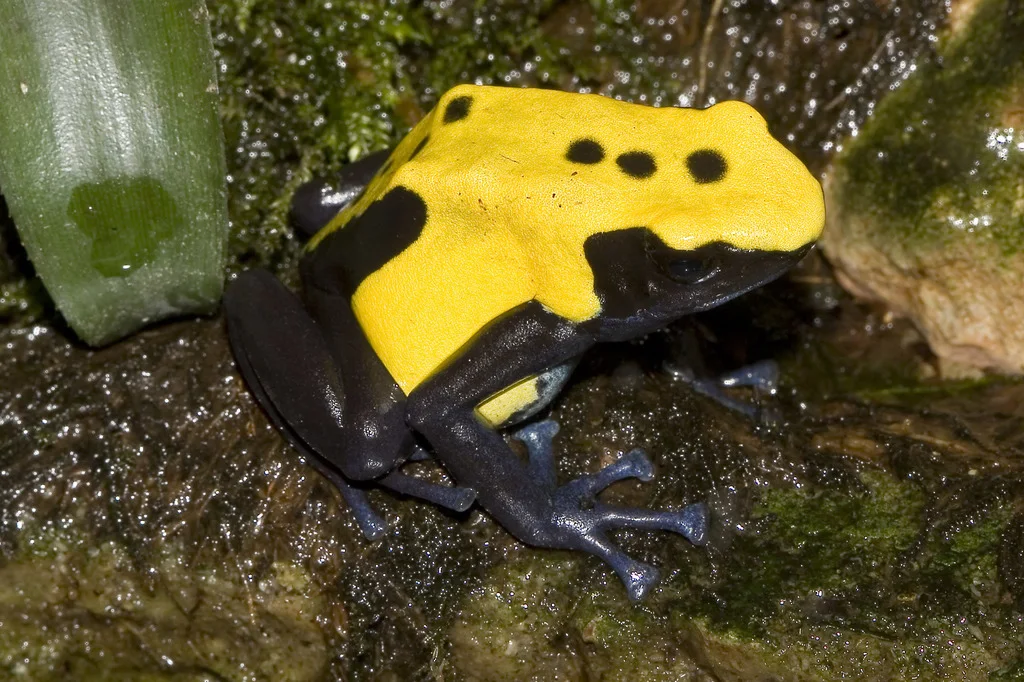
A record of its presence.
Discover where people have documented this species.
Put discovery on the map.
Load the map to request GBIF basemap tiles and public biodiversity records.
Map data represents recorded observations and occurrences, not necessarily the complete natural range of a species. Sensitive or obscured coordinates are excluded from individual markers.